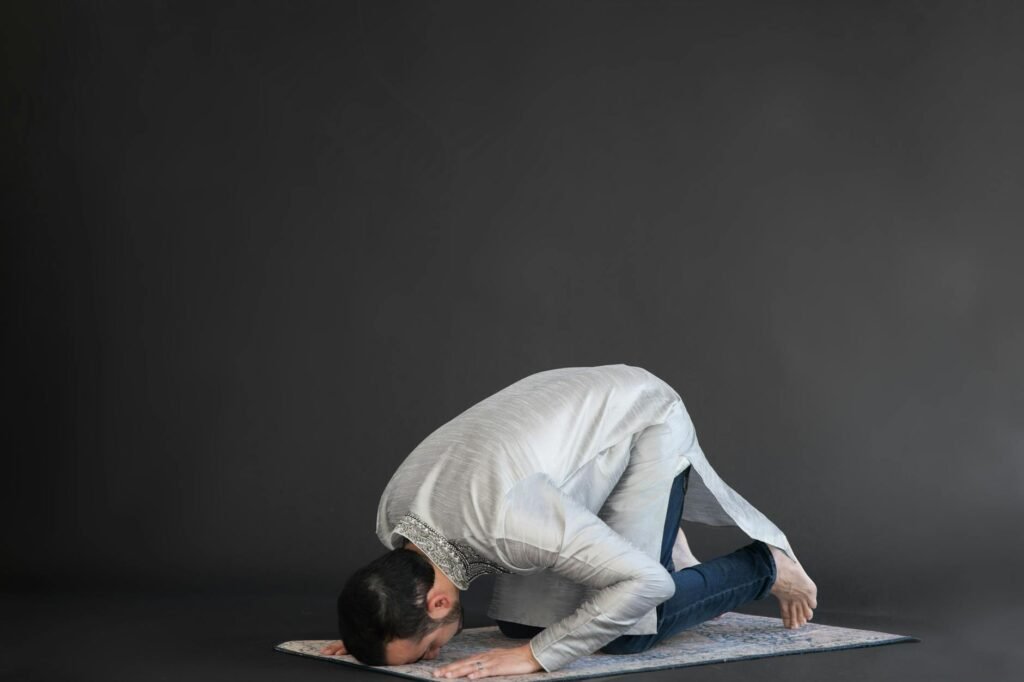

- Introduction: My Journey from Stress to Sujood
There was a time when my mind was constantly restless. I was working long hours, chasing deadlines, and forgetting the peace of my soul. I remember one day feeling completely burned out — until I placed my forehead on the ground in sujood. That moment, something changed. My heartbeat slowed, my mind calmed, and tears rolled down without control. Later, I began researching what happens during prostration — and what I found amazed me. Science may try to explain it, but there are blessings in sujood that even doctors can’t fully describe.

- The Hidden Power of Prostration
Prostration is not just a movement of prayer — it’s a spiritual science. When you bow down, blood flows naturally to the brain’s frontal lobe, the center for decision-making and emotions. Medical researchers call it a “neural reset.” But Islam taught us this 1,400 years ago. In sujood, the ego falls, the heart rises, and the body aligns with humility. Every time I prostrate, I feel my anxiety melt away and my thoughts become clearer.
- Benefit 1: Brain Detox and Oxygen Boost
Modern neuroscience confirms that when the head is placed lower than the heart, brain circulation improves. This increases oxygen and nutrient flow, reducing fatigue and sharpening focus. The Quran says, “Indeed, in the remembrance of Allah do hearts find rest.” (13:28) That verse became my truth. When I started praying with deep sujood, my sleep improved, and even headaches vanished. It was as if my body was detoxing through devotion.
- Benefit 2: Emotional Healing and Stress Relief
Psychologists agree that grounding — connecting the body to the earth — reduces stress. During sujood, the body touches the ground, releasing electromagnetic tension. But the real relief is spiritual. When you surrender your worries to Allah, your nervous system finds calm. Studies from Malaysia and Turkey show reduced cortisol (stress hormone) levels after salah. I didn’t need medicine anymore — sujood became my therapy.

- Benefit 3: Heart Health and Circulation
Doctors often recommend yoga for circulation, but sujood is the purest and most natural form of movement therapy. The rhythmic flow of prayer improves blood flow, lowers blood pressure, and supports heart health. I started noticing better stamina and warmth in my hands and feet. Medical science calls it “improved vascular flexibility,” but I call it barakah.

- Benefit 4: Posture, Spine, and Muscle Strength
Salah involves all major muscle groups — stretching, bending, and holding postures that strengthen the core. When you go into sujood, your spine decompresses naturally, reducing back pain and improving flexibility. Physiotherapists now study how Islamic prayer benefits the body’s alignment. My chronic back pain disappeared within weeks of regular salah. Truly, every sajdah is medicine.
- Benefit 5: Mindfulness and Focus Training
We live in a world of distractions — constant screens, noise, and pressure. Sujood is the Islamic form of mindfulness. When you place your forehead down, you silence the outside world. Studies show that consistent prayer improves attention span and emotional regulation. For me, every sajdah is a digital detox. It reconnects me with the present moment — the only moment that truly matters with Allah.
- Benefit 6: Humility and Emotional Intelligence
When we prostrate, we physically humble ourselves. The body posture itself teaches the heart humility. Studies in behavioral science show that physical humility (bowing, lowering the head) increases empathy and self-awareness. Islam already taught us this — sujood purifies not just the mind, but the soul. I became calmer, kinder, and more patient. Doctors can’t measure this — but everyone around me could feel the change.
- Benefit 7: Spiritual and Subconscious Healing
Science can track brainwaves, but it can’t measure faith. During sujood, the body releases endorphins, the “feel-good” hormones. But beyond that, there’s something divine: the peace that enters the soul. The Prophet ﷺ said, “The closest a servant is to his Lord is while he is in prostration.” (Muslim). That closeness can’t be explained — only experienced. Sujood realigns your entire existence toward your Creator.
- The Medical Community’s Curiosity
In the last decade, researchers from Harvard, Istanbul, and Riyadh have studied Islamic prayer postures. Many call it “the most balanced form of meditation.” But even they admit — the psychological transformation of a person in sujood can’t be fully explained. Doctors can describe the how, but not the why. The secret lies in niyyah — the intention behind the act.
- Sujood and Sleep Science
For those who struggle with insomnia, sujood has proven calming effects. Breathing deeply during prayer activates the parasympathetic nervous system — the body’s “rest mode.” Within weeks of praying Isha sincerely, I began sleeping better and waking up fresher. My body found its natural rhythm again. Sleep scientists may call it balance; we Muslims call it sakoon — tranquility.
- Mental Health in the Age of Anxiety
Depression and anxiety dominate modern life. I’ve met doctors who prescribe mindfulness and meditation — yet the most effective method has been in Islam all along. Regular sujood lowers heart rate, balances hormones, and enhances positivity. It’s not superstition; it’s submission that heals. The more I prayed, the more emotionally stable I became. My sujood became my silent counselor.
- A Divine Reset Button
Every time I felt lost, I went to the prayer mat. One sajdah and my world realigned. That single act reminded me that success isn’t in control — it’s in surrender. Even science supports this idea: letting go reduces psychological pressure. But Islam perfected it. True peace comes when the forehead touches the ground — when you admit, “Ya Allah, I depend on You.”
- Fajr Connection and Morning Energy
When I added consistent Fajr prayers to my life, my mornings became lighter. Waking early increases serotonin levels, the happiness hormone. Science calls it “circadian rhythm alignment.” Islam calls it barakah in time. The world feels quiet, focused, and peaceful during those early hours — it’s the perfect moment for sujood and reflection.
- Quran and Brainwaves
Studies show that reciting the Quran during sujood increases alpha brainwaves — the same waves activated in deep meditation. This improves memory, creativity, and emotional balance. I experienced this firsthand — my mind became sharper, and negative thoughts disappeared. The Quran, combined with sujood, became my healing formula.
- The Energy of Gratitude
Sujood isn’t just an act of worship — it’s gratitude in motion. Each prostration says, “Thank You, Allah.” Gratitude activates parts of the brain linked to happiness and satisfaction. Neuroscience confirms it; Islam made it a daily duty. I learned that happiness doesn’t come from having more — it comes from lowering your head and saying Alhamdulillah.
- Transformation of the Heart
Doctors can scan the brain, but they can’t scan the heart. Sujood changes both. It replaces pride with peace, anger with patience, and despair with hope. Every sajdah I performed became a reminder: my worth doesn’t come from this world — it comes from my Creator.
- Why Doctors Can’t Explain It All
Because sujood isn’t just about the physical — it’s about the unseen. Medical data can’t measure the weight that leaves the heart or the light that enters it. That’s why every Muslim who prays feels peace science cannot explain.
- The Ultimate Connection Between Faith and Science
Faith and science are not enemies — they are allies pointing to the same truth. The more researchers study salah, the more they uncover hidden benefits. But for believers, we already know: every sajdah heals because Allah designed it to.
- Conclusion: Prostration Is the Medicine of the Soul
After years of searching for peace through science, I found it through sujood. Now I know why doctors can’t explain it — because sujood heals what medicine cannot. It cures loneliness, fear, stress, and doubt. The secret to a peaceful life lies not in labs, but in lowering the head in humility. Every time my forehead touches the ground, I whisper: “O Allah, there’s no peace without You.”


