
Paragraph 1 (Hindi)
हज इस्लाम का पाँचवाँ स्तंभ है और यह हर उस मुसलमान पर फ़र्ज़ है जिसके पास माल और तंदुरुस्ती मौजूद हो।
यह मक्का मुकर्रमा में अदा किया जाता है और दुनिया भर से लाखों मुसलमान इसमें शामिल होते हैं।
हज सिर्फ़ सफ़र नहीं बल्कि रूह को पाक करने वाली इबादत है।
इससे इंसान गुनाहों से पाक होकर नया जीवन शुरू करता है।
हज का सफ़र अल्लाह के करीब ले जाता है।
यह इंसान को बराबरी और तवाज़ो सिखाता है।
इसीलिए हज को इस्लाम की सबसे अज़ीम इबादत कहा जाता है।
Paragraph 2 (English)
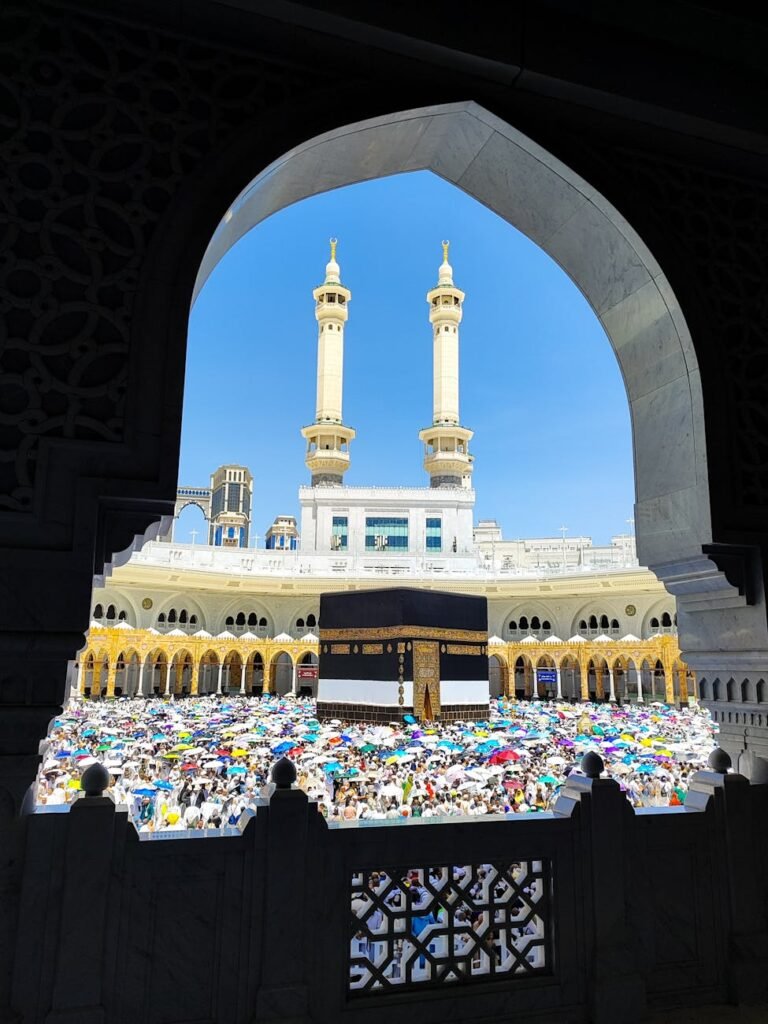
Hajj is the fifth pillar of Islam and is obligatory upon every Muslim who has financial means and physical ability.
It is performed in Makkah where millions of Muslims gather from across the world.
Hajj is not just a journey but an act that purifies the soul.
It wipes away sins and gives a believer a fresh spiritual start.
This pilgrimage brings a Muslim closer to Allah.
It teaches equality, humility, and unity.
That is why Hajj is regarded as one of the greatest acts of worship in Islam.
Paragraph 3 (Hindi)
हज की शुरुआत एहराम से होती है।
मुसलमान मीक़ात पर पहुँचकर नीयत करता है और एहराम की हालत में दाख़िल होता है।
मर्द दो सफ़ेद चादरें पहनते हैं और औरतें सादगी वाला लिबास।
एहराम अल्लाह के सामने बराबरी और तवाज़ो की निशानी है।
इस दौरान “लब्बैक अल्लाहुम्मा लब्बैक” की तलबिया पढ़ी जाती है।
एहराम की हालत में झगड़ा, बाल काटना, या शिकार करना मना है।
यही हज की असली शुरुआत है।
Paragraph 4 (English)
Hajj begins with entering into the state of Ihram.
At Miqat, pilgrims make the intention and wear the Ihram garments.
Men wear two simple white sheets while women wear modest dress.
Ihram symbolizes equality and humility before Allah.
During this state, pilgrims chant “Labbaik Allahumma Labbaik.”
Acts like fighting, cutting hair, or hunting are strictly forbidden.
This marks the sacred beginning of Hajj.
Paragraph 5 (Hindi)
हज का दूसरा बड़ा अमल काबा शरीफ़ का तवाफ़ है।
मुसलमान सात चक्कर लगाते हैं जिसकी शुरुआत हज्र-ए-असवद से होती है।
तवाफ़ अल्लाह की इबादत और मुसलमानों की एकता की निशानी है।
हर चक्कर इंसान के ईमान को मजबूत करता है।
हज्र-ए-असवद को छूना या उसकी तरफ़ इशारा करना सुन्नत है।
तवाफ़ करते हुए दिल अल्लाह से करीब हो जाता है।
यही हज का सबसे अहम हिस्सा है।
Paragraph 6 (English)
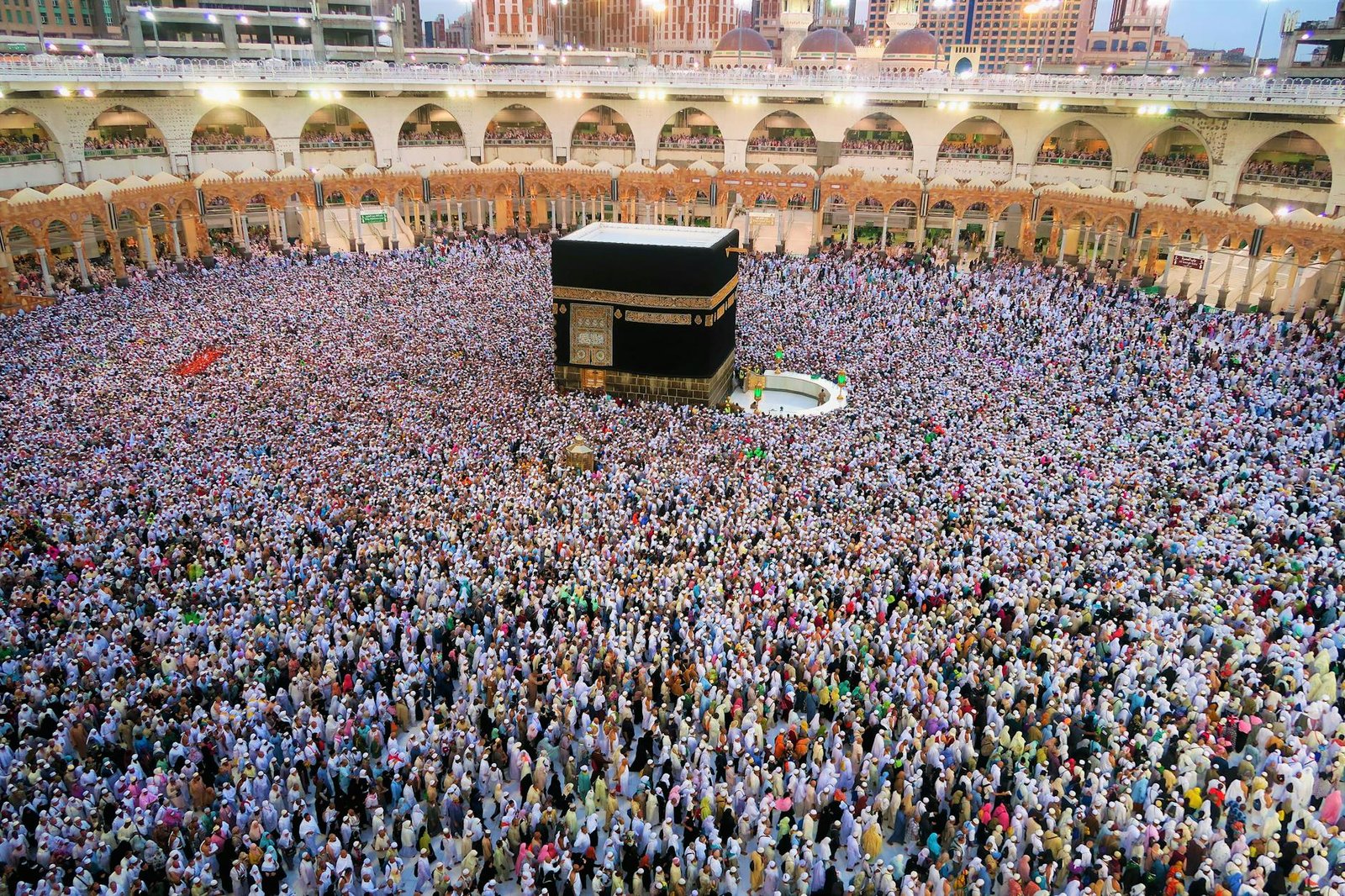
The second major ritual of Hajj is Tawaf around the Kaaba.
Pilgrims circle the Kaaba seven times, starting from the Black Stone.
Tawaf symbolizes devotion to Allah and unity among Muslims.
Each round strengthens faith and devotion.
Touching or pointing toward the Black Stone is Sunnah.
During Tawaf, hearts feel immense closeness to Allah.
This is one of the most important parts of Hajj.
Paragraph 7 (Hindi)
तवाफ़ के बाद मुसलमान सफ़ा और मरवा के दरम्यान सई करते हैं।
सात बार आना-जाना हज का फ़र्ज़ हिस्सा है।
यह हज़रत हाजरा (अ.स) की सब्र और दुआ की याद है।
उन्होंने बेटे इस्माइल (अ.स) के लिए पानी ढूँढा था।
उनकी दुआओं से ज़मज़म का चश्मा निकला।
सई मुसलमान को सब्र और अल्लाह पर भरोसा सिखाती है।
यही हज की अहम रुक्नियत है।
Paragraph 8 (English)
After Tawaf, pilgrims perform Sa’i between Safa and Marwah.
They walk seven times between the two hills.
This ritual commemorates the struggle and prayers of Hajar (AS).
She searched for water for her son Ismail (AS).
By Allah’s mercy, the Zamzam spring appeared.
Sa’i reminds Muslims of patience and trust in Allah.
It is a significant pillar of Hajj.
Paragraph 9 (Hindi)
इसके बाद हाजी मिऩा की तरफ़ जाते हैं।
मिना में लाखों मुसलमान क़याम करते हैं और अल्लाह की याद में मशगूल रहते हैं।
यहाँ नमाज़ें अदा की जाती हैं और रात गुज़ारी जाती है।
मिना का क़याम हज की तैयारी का हिस्सा है।
यह इंसान को सब्र और इबादत की तरफ़ ले जाता है।
हर मुसलमान अल्लाह से दुआ करता है।
यही सफ़र का अगला मरहला है।
Paragraph 10 (English)
After this, pilgrims move towards Mina.
In Mina, millions of Muslims stay together remembering Allah.
They perform prayers and spend the night there.
The stay in Mina is a preparation for the next rituals of Hajj.
It builds patience, devotion, and focus on worship.
Every Muslim prays sincerely to Allah.
This marks the next stage of the sacred journey.
Paragraph 11 (Hindi)
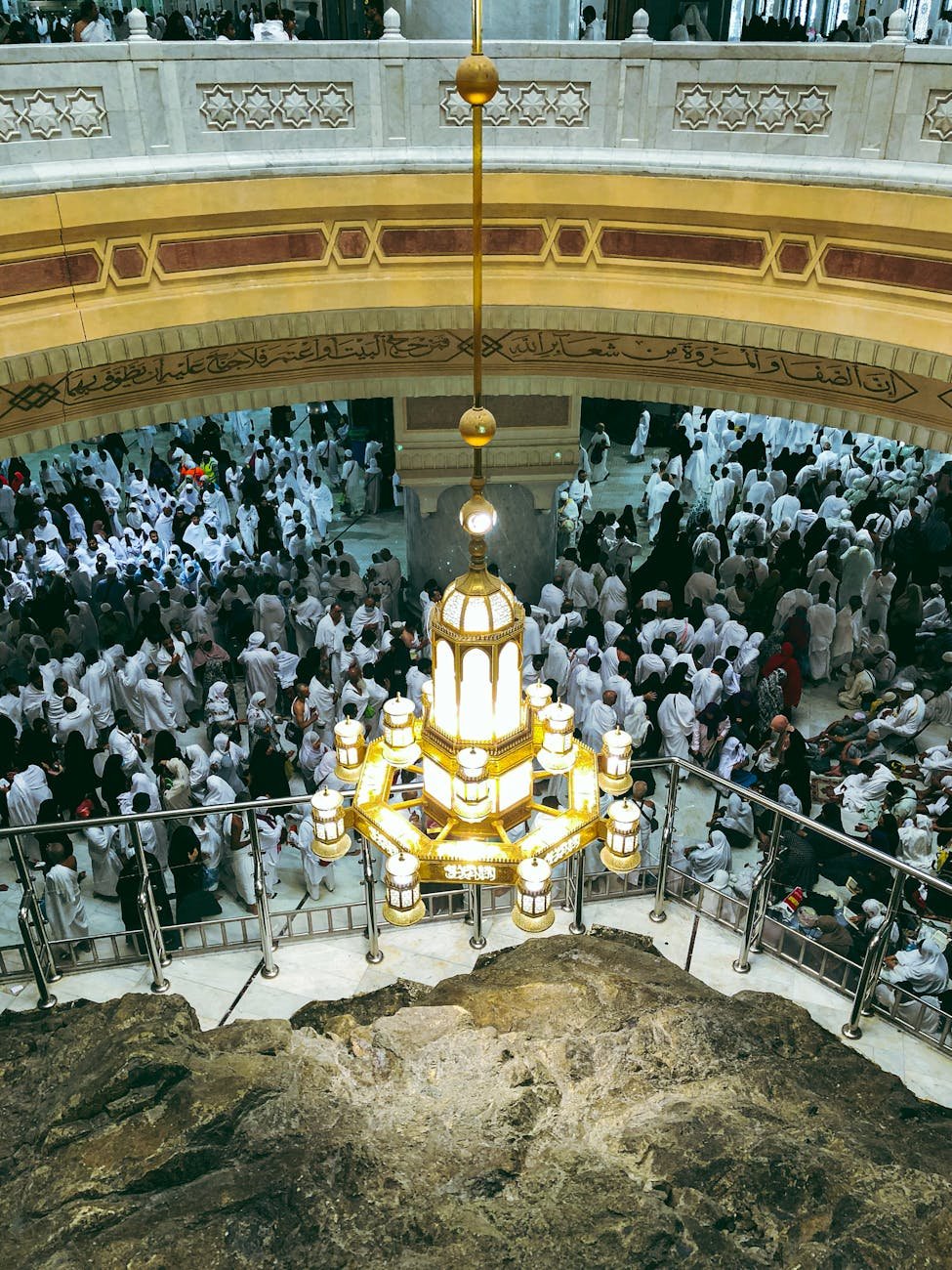
मिना से अगले दिन मुसलमान अराफ़ात की तरफ़ जाते हैं।
यौम-ए-अरफ़ा हज का सबसे अहम दिन है।
यहाँ मुसलमान अल्लाह से दुआएँ करते हैं और माफ़ी माँगते हैं।
रसूल अल्लाह ﷺ ने फ़रमाया कि हज अरफ़ा है।
अरफ़ात का मैदान इंसानों की बराबरी और अल्लाह की रहमत की निशानी है।
यहाँ लाखों मुसलमान रो-रोकर दुआ करते हैं।
यह हज का रूहानी उरूज है।
Paragraph 12 (English)
The next day, pilgrims go to Arafat.
The Day of Arafah is the most important day of Hajj.
Here Muslims make dua and seek forgiveness.
The Prophet ﷺ said, “Hajj is Arafah.”
The plain of Arafat symbolizes equality and Allah’s mercy.
Millions of Muslims cry and pray sincerely.
This is the spiritual climax of Hajj.
Paragraph 13 (Hindi)
अरफ़ात से वापसी पर मुसलमान मुज़दलिफ़ा में क़याम करते हैं।
यहाँ लोग खुले मैदान में रात बिताते हैं।
नमाज़ें अदा की जाती हैं और कंकड़ियाँ जमा की जाती हैं।
यही कंकड़ आगे जमारात को मारने के लिए काम आती हैं।
मुज़दलिफ़ा इंसान को सब्र और अल्लाह पर भरोसा सिखाता है।
साधगी और सादगी का यह मंज़र हज की रूह है।
यही सफ़र का हिस्सा है।
Paragraph 14 (English)
After leaving Arafat, pilgrims stay in Muzdalifah.
They spend the night in the open field.
Prayers are offered and small stones are collected.
These stones are later used for stoning the Jamarat.
Muzdalifah teaches patience and reliance on Allah.
The simplicity and humility here reflect the spirit of Hajj.
This is a vital stage of the pilgrimage.
Paragraph 15 (Hindi)
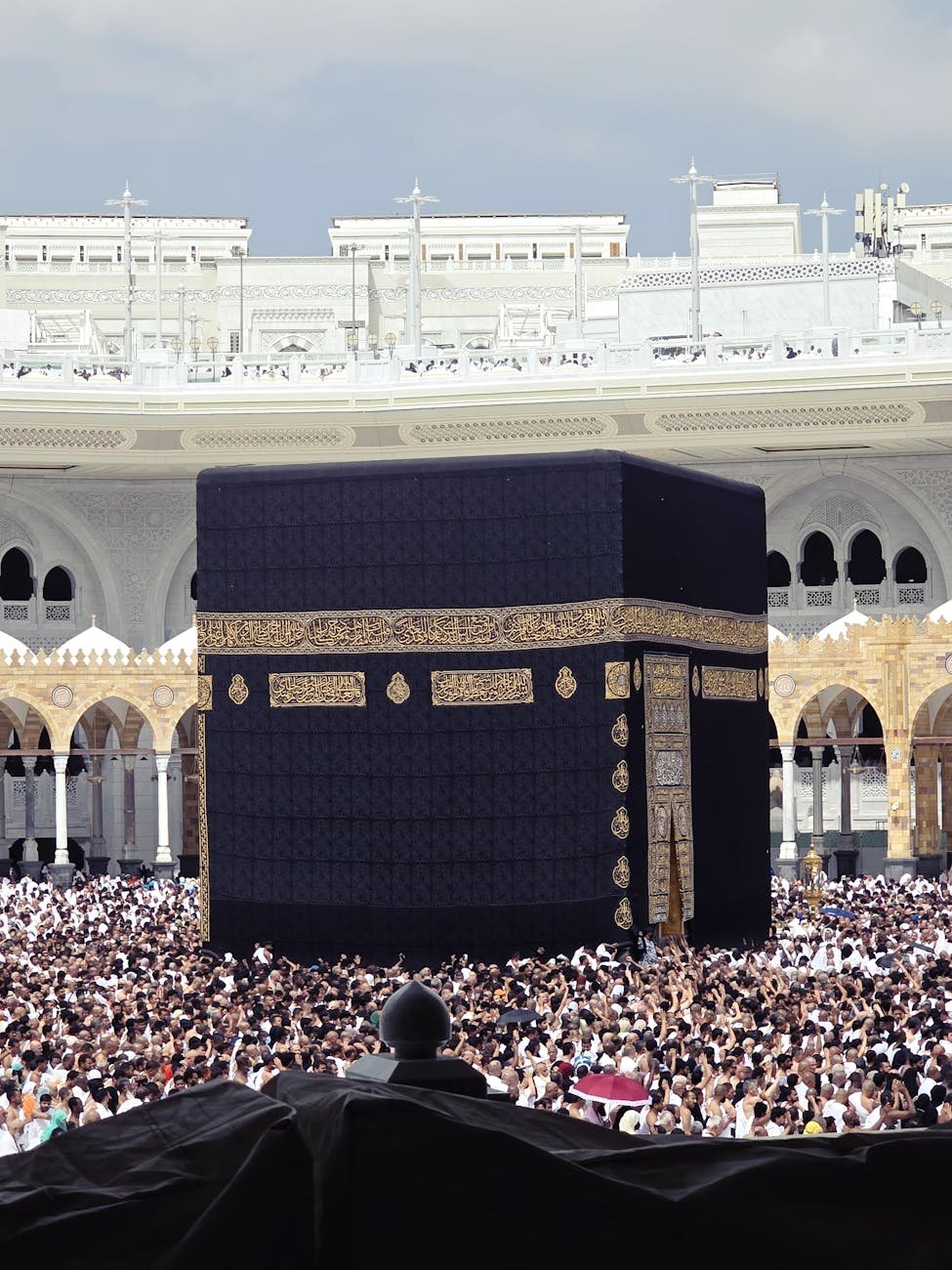
अगले दिन मुसलमान मिना वापस जाते हैं और जमारात को कंकड़ियाँ मारते हैं।
यह अमल शैतान को ठुकराने की निशानी है।
तीन जमारात पर सात-सात कंकड़ मारी जाती हैं।
यह अमल इंसान को गुनाह और बुराई से दूर रहने का सबक़ देता है।
रसूल अल्लाह ﷺ ने भी यही अमल किया।
जमारात अल्लाह की राह पर सब्र और जद्दोजहद की याद दिलाता है।
यह हज का अहम हिस्सा है।
Paragraph 16 (English)
The next day, pilgrims return to Mina and perform the stoning of Jamarat.
This act symbolizes rejecting Satan and his temptations.
Seven stones are thrown at each of the three pillars.
It teaches Muslims to resist sin and evil.
The Prophet ﷺ himself performed this ritual.
Jamarat reminds believers of struggle and patience in Allah’s path.
It is an essential ritual of Hajj.
Paragraph 17 (Hindi)
जमारात के बाद मुसलमान जानवर की कुर्बानी करते हैं।
यह हज़रत इब्राहीम (अ.स) की सुन्नत की याद है।
उन्होंने अल्लाह के हुक्म पर बेटे इस्माइल (अ.स) की कुर्बानी देने का इरादा किया था।
अल्लाह ने उनकी जगह जानवर भेजा।
कुर्बानी इंसान को तवक्कुल और अल्लाह की रज़ा सिखाती है।
मुसलमान दुनियाभर में यही अमल करते हैं।
यही हज का हिस्सा है।
Paragraph 18 (English)
After Jamarat, pilgrims offer animal sacrifice.
This follows the Sunnah of Prophet Ibrahim (AS).
He intended to sacrifice his son Ismail (AS) for Allah’s command.
Allah replaced him with an animal.
Sacrifice teaches trust, obedience, and submission to Allah.
Muslims around the world follow this ritual.
It is a vital part of Hajj.
Paragraph 19 (Hindi)
कुर्बानी के बाद मुसलमान अपने बाल कटवाते या मुँडवाते हैं।
यह ताज़गी और गुनाहों से पाक होने की निशानी है।
इसके बाद फिर से काबा का तवाफ़ किया जाता है जिसे तवाफ़-ए-ज़ियारत कहते हैं।
यह हज की तक़मील है।
फिर मुसलमान मिना में वापस आकर नमाज़ें अदा करते हैं।
आख़िरी दिन जमारात को फिर कंकड़ मारी जाती हैं।
यही हज का मुकम्मल सफ़र है।
Paragraph 20 (English)
After sacrifice, pilgrims shave or trim their hair.
This symbolizes purification and renewal after forgiveness of sins.
They then perform Tawaf al-Ziyarah around the Kaaba.
This completes the Hajj rituals.
Pilgrims return to Mina for prayers.
On the final days, stoning of Jamarat is repeated.
This marks the completion of the sacred journey of Hajj.